


The Future of Workforce Development Should Be Predictive, Not Reactive

For decades, much of America’s workforce development system has followed the same pattern– employers identify a shortage, institutions respond, funding is assembled, training programs are created, and people are recruited into occupations that are already difficult to fill.
By the time all of that happens, the economy has often moved again.
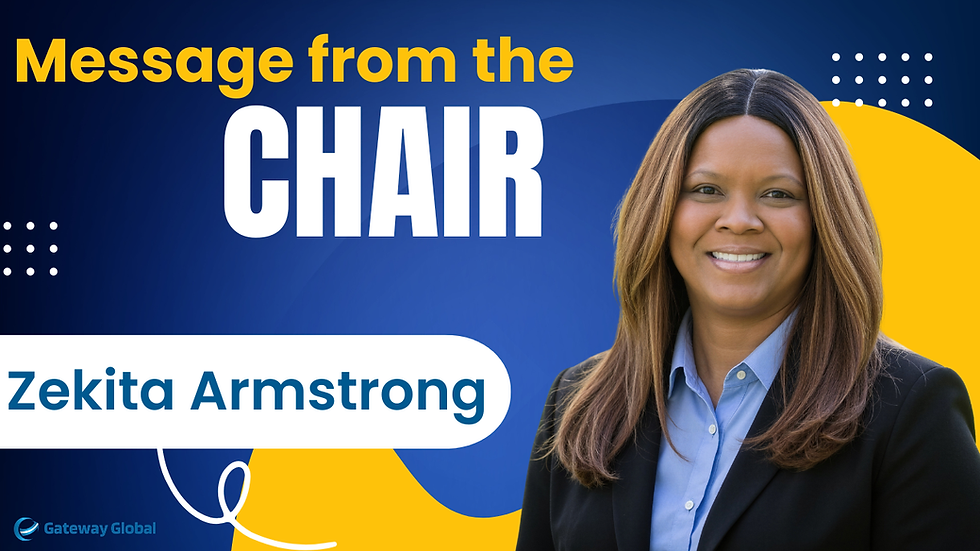
That approach is increasingly inadequate in an economy being reshaped by artificial intelligence, automation, advanced manufacturing, robotics, cybersecurity, geospatial technology, data science, and other emerging technologies. The speed of technological change is now faster than the traditional workforce development cycle. The future of workforce development must therefore be predictive, not reactive.
We have more information available to us than ever before. Labor market data can show changes in occupations and skills. Employer data can signal emerging talent needs. Economic development activity can tell us where industries are investing and expanding. Education data can reveal whether enough students are entering the pathways required to support those industries. Artificial intelligence and data analytics give us the ability to examine these signals together and identify patterns much earlier.
The question workforce leaders should be asking is no longer simply, “Where are the jobs today?” We should be asking, “What capabilities will America need five, ten, and fifteen years from now– and where and when do we need to begin developing people for them?” That distinction is critical.
If we know that artificial intelligence, cybersecurity, autonomous systems, geospatial
intelligence, advanced communications, and critical infrastructure technologies will become increasingly important to the American economy, we cannot wait until employers have thousands of vacancies before developing talent. Students need earlier exposure to these industries, followed by intentional connections to technical education, industry recognized credentials, higher education, apprenticeships, and employment.
This is why workforce development must function as a continuum rather than a series of disconnected interventions. A strong workforce system should begin with awareness and continue through education, skill development, applied experience, employment, and advancement.
Predictive planning also requires employers to participate differently. Employers cannot remain primarily at the end of the pipeline as recruiters. They should help shape it. Their knowledge of future technology investments, changing skill requirements, automation plans and anticipated workforce needs can help educators and workforce organizations prepare talent before shortages become critical.
Responsible use of Artificial intelligence can strengthen that process considerably. Imagine workforce systems that continuously analyze occupational trends, employer demand, technology adoption, demographic changes, credential requirements, and industry investments. That intelligence could help schools, colleges, universities, workforce organizations and employers make earlier and better decisions about where talent development should be concentrated. It could also give students something our current system often fails to provide– a clearer view of where opportunity is going.
Prediction, of course, does not mean certainty. No algorithm can tell us exactly which job titles will dominate the economy by 2035. But that is not the point. Good workforce forecasting should help us identify direction– which capabilities are becoming more valuable, which industries are converging, where investment is accelerating, and which foundational skills can transfer across multiple sectors. Knowing these things earlier will matter.
If we identify a workforce shortage when companies cannot find workers, we are already late. If we recognize the trajectory while students are still making education and career decisions, we have the opportunity to build an entirely different pipeline.
America cannot continue developing technology faster than it develops people.
The next generation of workforce development will not simply train people faster. It should see farther ahead– and begin building talent before the shortage arrives.
In Service,

Zekita Armstrong
Founder, Chair
Gateway Global
"The Future of Work Begins Here"
Comments